what's the difference between primrose and polyanthus
Summer Pruning Roses: Techniques, Benefits, and Preventing Disease Spread Summer pruning for roses focuses on maintenance rather than the heavy structural cuts done in late winter or early spring. It promotes healthier plants, better airflow, repeat blooming in many varieties, and controlled size—especially useful in warmer climates where roses grow vigorously without a true dormant period. Why Prune in Summer?
- Encourages reblooming: Removing spent flowers (deadheading) and cutting back stems directs energy into new growth and flowers.
- Improves plant health: It removes dead, damaged, or diseased wood, reduces overcrowding, and enhances air circulation to lower fungal disease risk.
- Manages size and shape: Vigorous roses stay compact and shapely, preventing them from becoming leggy or too tall.
- Timing: Perform light pruning throughout the growing season as needed, with more substantial cuts after major flushes of bloom (often late summer). Avoid heavy pruning in extreme heat or drought.
Step-by-Step Guide to Summer Pruning Roses
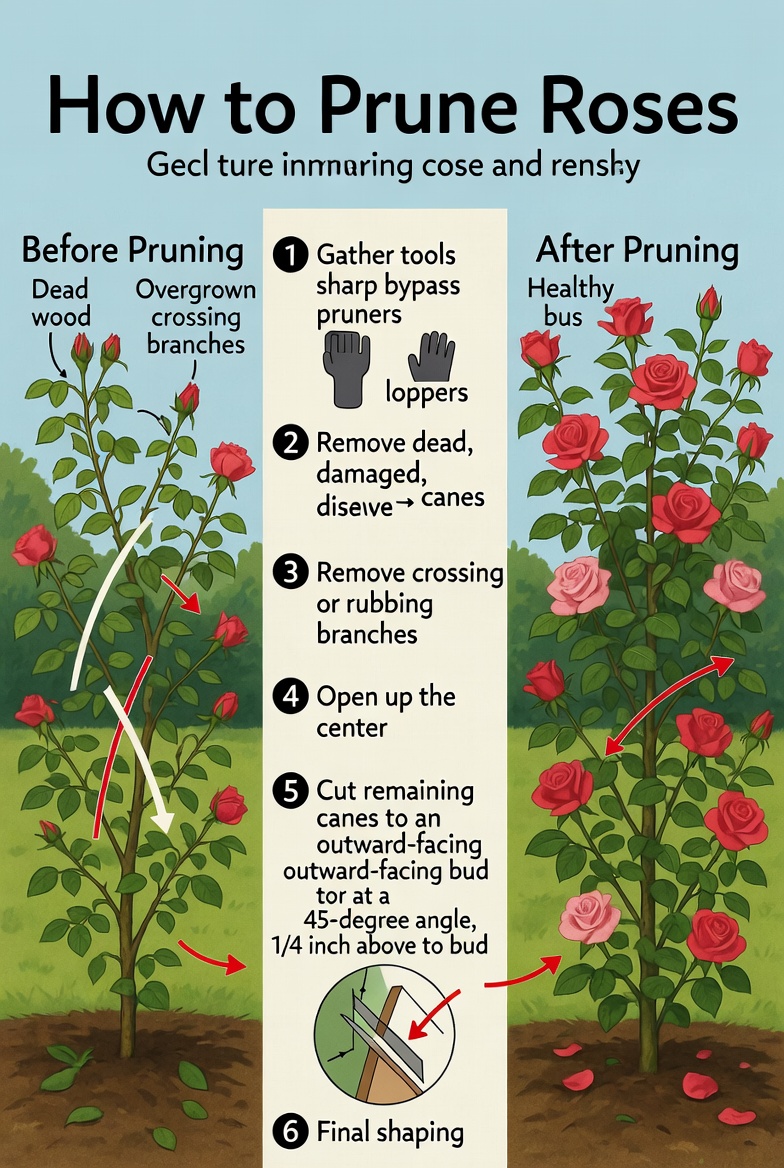
- Gather the right tools: Sharp bypass pruners (for stems up to ½ inch), loppers for thicker canes, gloves, and a clean bucket or bag for debris. Disinfect tools (more on this below).
- Inspect the plant: Look for dead, damaged, diseased, or crossing/rubbing branches. Identify spent flower clusters.
- Deadhead spent blooms:
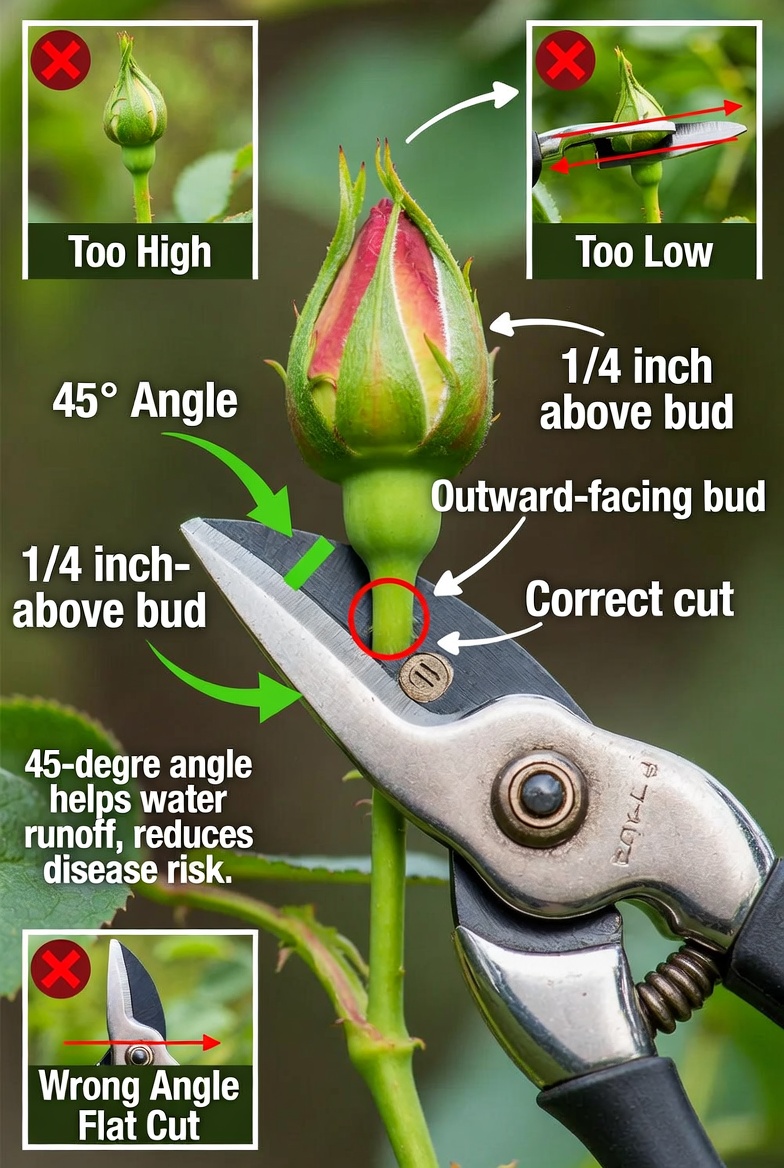
- Trace the stem back from the faded flower to the first or second outward-facing leaf with five leaflets (this promotes stronger regrowth than cutting higher up).
- Make a clean, angled cut (about 45 degrees) just above the leaf node, sloping away from the bud to prevent water pooling.
- Remove problem wood:
- Cut out dead or weak stems at their base or to a healthy outward-facing bud.
- For crossing or inward-growing branches, remove the weaker one to open the center.
- On repeat-blooming shrub or floribunda roses, lightly shape by cutting flowering stems back by about one-third to one-half after a flush.
- Thin for airflow: Remove a few older canes if the bush is crowded, cutting them low to encourage basal growth.
- Clean up: Dispose of all clippings (especially diseased material) in the trash or by burning—do not compost. Water the plant afterward if soil is dry, and apply a balanced fertilizer or compost to support recovery.
Note: For once-blooming shrub roses, focus on deadheading and light cleanup in summer; save major shaping for after flowering in late summer. Knock Out roses and similar vigorous types respond well to regular summer maintenance.
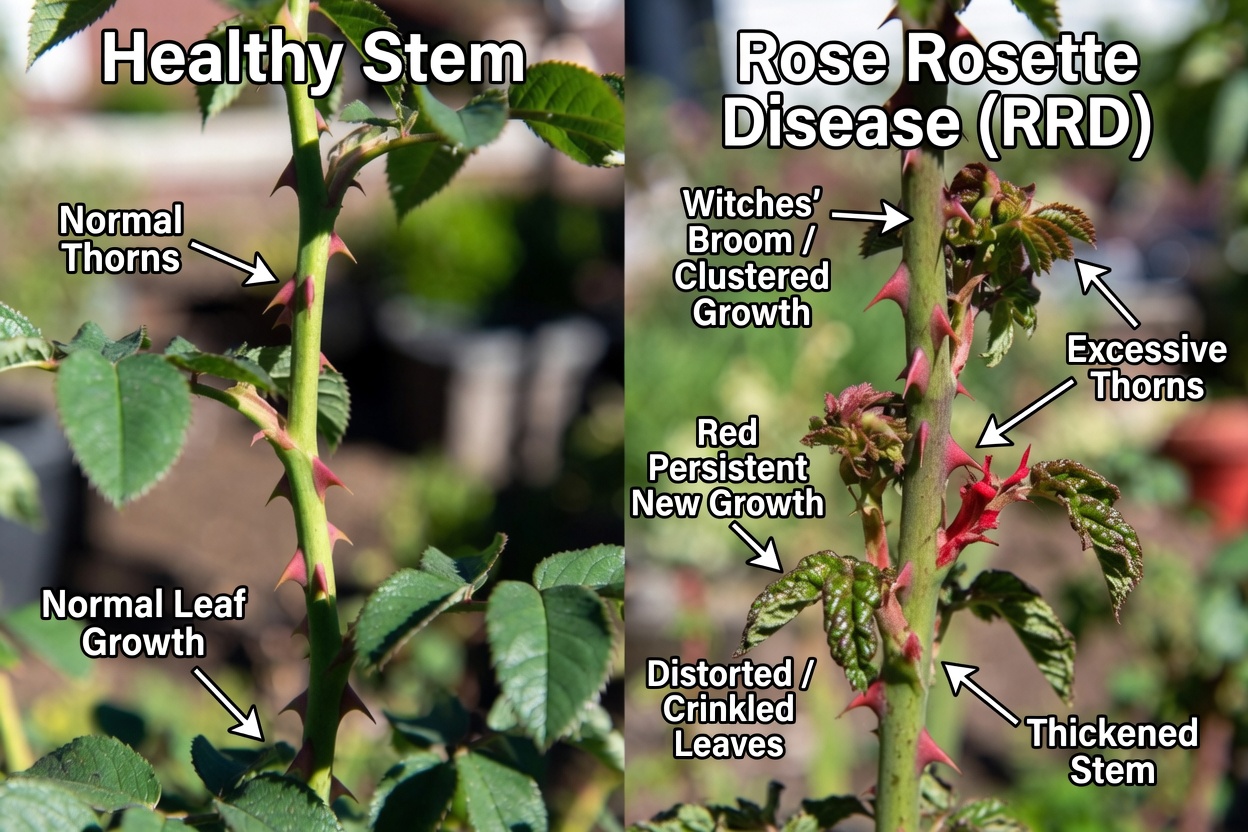
Preventing Viruses and Diseases (Like "Cancers") from Spreading During PruningRoses are susceptible to viral diseases such as Rose Rosette Disease (RRD)—often called "rose cancer" due to its witches'-broom growth and distortion—and bacterial issues like crown gall. Fungal problems (black spot, powdery mildew) also spread easily via tools or debris. Pruning can inadvertently spread pathogens if not done carefully. Key Sanitation Tips
- Disinfect tools frequently:
- Use 70% isopropyl alcohol (rubbing alcohol) on a rag or spray—wipe blades between cuts, especially when moving between plants or after touching suspect material. It’s fast and less corrosive.
- Alternative: 10% bleach solution (1 part household bleach to 9 parts water). Soak or wipe for 30 seconds to several minutes, then rinse and dry tools to prevent rust. Mix fresh daily.
- Work healthy plants first, then any questionable ones last.
- Handle diseased material carefully:
- For suspected RRD or viral symptoms (distorted leaves, excessive thorns, witches' brooms), prune out affected shoots immediately and bag them on-site. If symptoms persist, remove the entire plant, including roots, and destroy it—do not compost.
- Crown gall appears as woody tumors at the base. Remove infected plants and affected soil if possible; disinfect tools thoroughly.
- Additional prevention:
- Prune in dry weather to reduce fungal spore spread.
- Wash hands, gloves, and clothing after handling suspect plants.
- Maintain plant vigor with proper spacing, watering at the base (avoid overhead), mulching, and balanced nutrition—stressed plants are more vulnerable.
- Remove and destroy fallen leaves/debris regularly.
- For RRD (mite-vectored), control eriophyid mites and avoid planting near wild multiflora roses.